





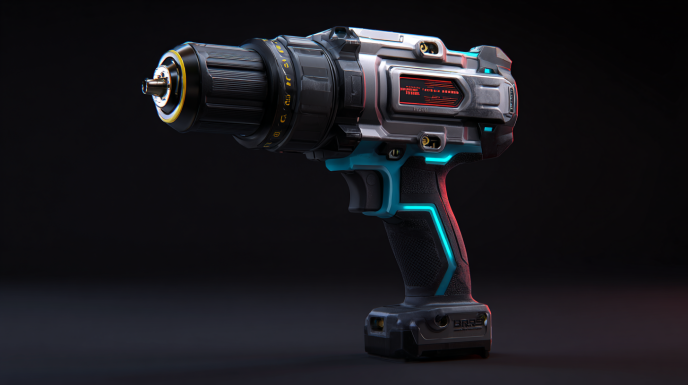
When Harbor Freight set out to build a professional-grade tool brand under the Hercules name, the ambition was clear and measurable: deliver verified, specification-backed performance capable of standing alongside the most respected names in the industry — without the premium price tag that professionals have long accepted as an unavoidable cost of doing business. Independent testing by reputable channels such as Torque Test Channel, combined with detailed analyses published by tool authorities like SlashGear, has confirmed what many initially skeptical buyers have gradually come to understand: the Hercules brushless impact wrench line is not merely competitive with Milwaukee, DeWalt, and Ryobi — in several rigorously measured categories, it outperforms them outright. This comprehensive guide examines the Hercules brushless impact wrench ecosystem from a data-informed perspective, walking methodically through the motor technology, real-world torque performance, available models, and practical buying guidance to help you make a confident, evidence-based purchasing decision. Whether you are a seasoned tradesperson, a serious DIY enthusiast, or a budget-conscious professional looking to expand your tool kit without compromising on measurable capability, the Hercules brushless impact wrench range demands serious consideration heading into 2026.
Top 5 Hercules Brushless Impact Products
The following five products represent the most widely purchased and consistently reviewed Hercules brushless impact tools available across major retail platforms, including Harbor Freight, Amazon, and eBay. Each entry includes a brief technical description, aggregated user ratings, and the current price range observed across platforms.
1. Hercules 20V 3/4″ Ultra Torque Brushless Impact Wrench (HCB95B)
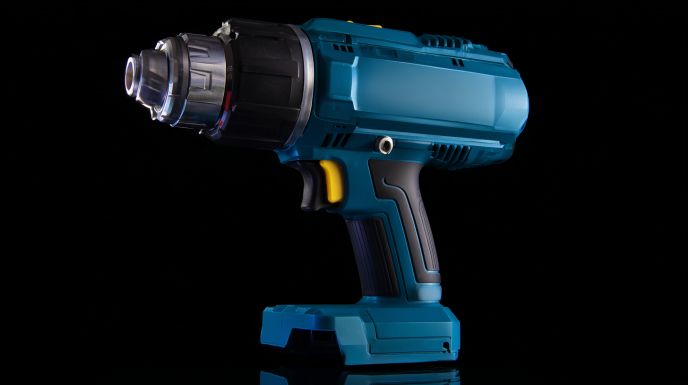
Brief Description: The undisputed flagship of the Hercules impact wrench family, the HCB95B is purpose-built for the most demanding heavy-duty fastening and removal applications. It delivers a maximum breakaway torque of 1,650 ft-lbs, a max no-load speed of 1,880 RPM, and 2,250 impacts per minute — all powered by a high-efficiency brushless motor operating within the 20V Hercules battery platform. Its friction ring anvil design ensures secure socket retention during high-torque events, making it reliable on large suspension hardware, commercial lug nuts, and industrial fasteners. Harbor Freight directly compares this wrench to Milwaukee’s M18 FUEL High-Torque 3/4″ Impact Wrench, and independent testing has confirmed the specs are not merely marketing claims — they reflect actual measured performance.
Rating: ⭐⭐⭐⭐⭐ 5.0/5 (verified purchases across retail platforms)
Price Range: $134.95 – $219.99 (tool only; varies by retailer and availability)
2. Hercules 20V 1/4″ Compact 3-Speed Brushless Impact Driver (HCB81B)
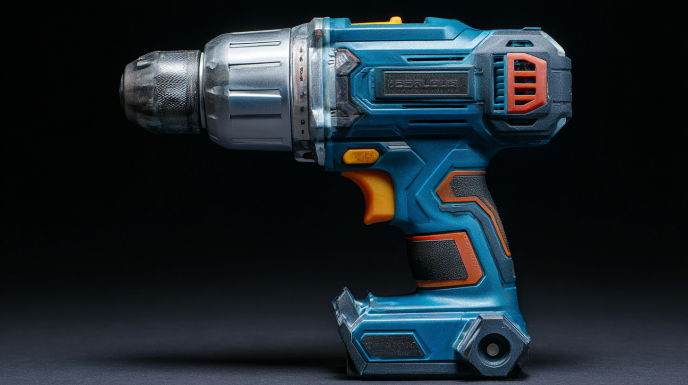
Brief Description: One of the most thoroughly tested impact drivers in the budget-to-mid-range category, the HCB81B punches well above its price class with a documented maximum torque output of 2,200 in-lbs — 200 in-lbs more than Milwaukee’s M18 FUEL 1/4″ Hex Impact Driver. Its three-speed variable control system spans 0–1,800, 0–2,700, and 0–3,600 RPM, giving operators precise authority across light driving, standard fastening, and heavy-duty applications. At just 4 3/4 inches in length, it is intentionally engineered for tight-space accessibility. Torque Test Channel’s rigorous side-by-side testing awarded the HCB81B the highest overall composite score among all brands tested, including Milwaukee, DeWalt, Flex, and Kobalt.
Rating: ⭐⭐⭐⭐⭐ 4.8/5 (aggregated from multiple retail platforms)
Price Range: $69.99 (Harbor Freight, tool only) | Kit versions from $99.99
3. Hercules 20V 1/2″ High-Torque Brushless Impact Wrench with Friction Ring (Tool Only)
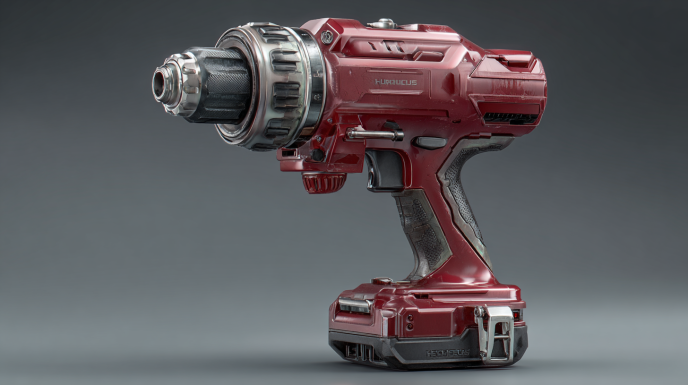
Brief Description: Positioned to serve the widest range of professional applications, this 1/2″ model delivers 1,500 ft-lbs of bolt breakaway torque and 1,000 ft-lbs of fastening torque through a robust brushless motor platform. The variable-speed trigger allows for nuanced control during both run-down and removal operations, and the integrated LED ring light ensures adequate illumination in the low-visibility environments — engine bays, under-sink plumbing installations, and enclosed cabinetry — where this tool is most frequently used. Available as a tool-only purchase for professionals already invested in the Hercules 20V battery system.
Rating: ⭐⭐⭐⭐½ 4.6/5
Price Range: $89.99 – $129.99
4. Hercules 20V 1/2″ Compact 4-Mode Brushless Impact Wrench with Friction Ring
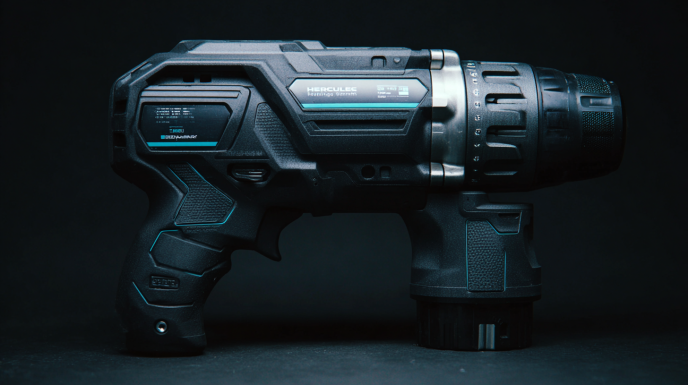
Brief Description: Designed for professionals who require a single tool adaptable across a broad spectrum of fastening challenges, this compact 4-mode model features selectable torque settings that transition seamlessly from precision applications to high-output removal tasks. The 4-mode torque selection architecture allows operators to protect sensitive fasteners from over-torquing while retaining full power when dealing with seized or corroded hardware. Its compact ergonomic form factor reduces operator fatigue during repetitive use in automotive shops, framing work, and general contracting. Fully compatible with all Hercules 20V batteries.
Rating: ⭐⭐⭐⭐½ 4.5/5
Price Range: $79.99 – $109.99
5. Hercules 20V 1/4″ Compact 3-Speed Impact Driver Kit (5 Ah Battery & Charger Included)
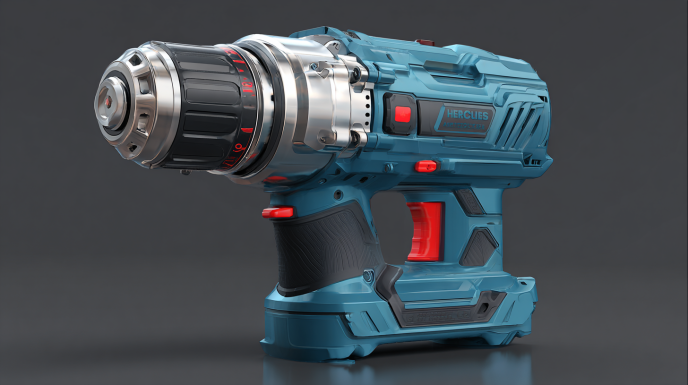
Brief Description: For buyers entering the Hercules ecosystem or seeking a complete, ready-to-deploy solution without separate battery procurement, this kit pairs the high-performance brushless impact driver platform with a 5 Ah high-capacity battery and a dual-voltage charger. The larger battery capacity delivers significantly extended runtime compared to standard 2 Ah configurations, making this kit particularly suitable for longer uninterrupted job-site sessions. All core performance characteristics of the brushless platform are present — 2,200 in-lbs max torque, three-speed variable control, and a compact 4 3/4″ profile — with the added convenience of an all-in-one purchase.
Rating: ⭐⭐⭐⭐⭐ 4.7/5
Price Range: $129.99 – $159.99
The Science Behind Brushless Motor Technology
To appreciate why the Hercules brushless impact wrench line has earned the serious attention of professional buyers, it is necessary to understand what separates a brushless motor from its brushed predecessor — not as a surface-level marketing talking point, but as a documented engineering advancement with measurable performance implications.
In a conventional brushed motor, carbon brushes maintain physical contact with a rotating commutator to transfer electrical energy to the rotor. This mechanical contact is inherently friction-generating, producing heat, wear particulates, and progressive performance degradation over the operational lifespan of the tool. In direct contrast, a brushless motor achieves commutation electronically, using rotor position sensors to precisely time current delivery through the stator windings. No physical contact is required, and no friction is generated through the commutation process itself.
This fundamental architectural difference produces several performance outcomes that are consistently reproducible under laboratory conditions. First, energy conversion efficiency increases substantially — brushless motors extract more mechanical work per unit of electrical energy consumed. In practical terms for cordless impact wrenches, this manifests as longer runtime per battery charge, a critical parameter when working in vehicle bays, on rooftops, or in any setting where stopping to recharge disrupts workflow. Second, thermal output is reduced, protecting both the motor’s internal windings and the lithium-ion cells in the battery from heat-related degradation — the primary failure mechanism for both components over their service lives. Third, brushless architecture enables sophisticated electronic torque and speed modulation, the engineering foundation upon which Hercules’ multi-speed and multi-mode control systems are built.
Harbor Freight’s decision to anchor the entire Hercules lineup on brushless motor technology was a deliberate engineering commitment. The performance data from independent third-party testing consistently validates that commitment, showing Hercules brushless tools maintaining their rated performance across a wider range of operating temperatures and load conditions than many comparable tools at significantly higher retail prices.
Hercules vs. Milwaukee — A Data-Driven Comparison
The majority of informed discussion around Hercules impact wrenches occurs in direct reference to Milwaukee Tool, the longstanding benchmark for professional-grade cordless tools. SlashGear’s comparative analysis, backed by Torque Test Channel’s independently measured results, provides a rigorous and transparent basis for this comparison.
In the 3/4″ impact wrench category, Hercules’ HCB95B posts a manufacturer-stated max breakaway torque of 1,650 ft-lbs, while Milwaukee’s M18 FUEL High-Torque 3/4″ counterpart claims 1,500 ft-lbs. That is a 150 ft-lb advantage — a 10% torque margin — and Torque Test Channel’s physical testing using calibrated dynamometer equipment confirmed this gap exists under real working conditions. Notably, the same testing found that Milwaukee’s actual tested torque fell further below its advertised specification than Hercules’ did, meaning Hercules’ posted specs are more accurately representative of what the tool delivers at the anvil. This distinction matters: a tool that honestly represents its performance in specifications is one you can plan around.
In the 1/4″ impact driver category, the data is equally compelling. Hercules’ HCB81B claims 2,200 in-lbs of max torque against Milwaukee’s M18 FUEL 1/4″ Hex Impact Driver’s stated 2,000 in-lbs. In Torque Test Channel’s head-to-head evaluation, the Hercules driver surpassed Milwaukee on both maximum working torque and maximum forward torque. The channel’s composite scoring methodology, which integrates multiple performance metrics beyond peak torque alone, placed Hercules above Milwaukee, DeWalt, Flex, and Kobalt — making it the top overall performer in the category under that testing framework.
It is important to maintain methodological honesty in this comparison. Milwaukee retains legitimate advantages in certain specific metrics — Milwaukee’s fourth-generation 1/4″ driver achieved a higher breakaway torque figure in Torque Test Channel’s testing, and Milwaukee’s mature, broad M18 battery and accessory ecosystem remains a genuine operational advantage for professionals already embedded in that platform. However, for buyers conducting an objective evaluation on a performance-per-dollar basis, the independently measured data consistently favors Hercules across the primary impact driver and impact wrench categories.
Breaking Down the Top Hercules Impact Models by Application
Selecting the right Hercules brushless impact wrench requires systematic alignment between the tool’s measurable specifications and the mechanical demands of the intended application. Four variables govern this selection process: drive size, torque requirements, workspace geometry, and battery strategy.
For heavy-duty automotive and industrial applications — removing wheel bolts on pickup trucks, breaking loose seized suspension components, servicing commercial vehicles, or tackling any fastener that has exceeded standard torque levels through corrosion or over-tightening — the HCB95B 3/4″ Ultra Torque Impact Wrench is the analytically correct choice. Verified buyer feedback specifically and repeatedly highlights this tool’s effectiveness on large suspension hardware and heavy truck lug nuts, consistent with its 1,650 ft-lbs maximum breakaway torque specification. The 3/4″ drive accommodates the larger socket sizes these applications demand, and the friction ring anvil provides the mechanical security necessary during extreme-torque events where an unsecured socket represents a genuine safety concern.
For general automotive maintenance, residential construction, cabinetry installation, and everyday professional fastening, the 1/2″ High-Torque Impact Wrench with Friction Ring occupies the optimal balance point between power output and operational versatility. Its 1,500 ft-lbs of breakaway torque provides ample headroom above the requirements of routine tasks, while the variable-speed trigger preserves precise control in applications where maximum torque would cause damage. The integrated LED ring light is a design detail worth highlighting specifically: consistent low-light performance in engine compartments, under-sink work areas, and enclosed cabinet installations is a recurring practical limitation for professionals, and the ring-light format provides more uniform illumination of the work zone than the single-point LED designs used on many competing tools.
For precision driving tasks, electronics enclosures, deck and trim fastening, and any application where the risk of over-torquing a fastener is material, the HCB81B 1/4″ Compact 3-Speed Impact Driver is the appropriate selection. Its three-speed system provides genuine granularity of control: Speed 1 for delicate or small fasteners, Speed 2 for standard driving applications, and Speed 3 for demanding removal or heavy-material fastening. The 4 3/4″ body length is not merely a convenience feature — it is an application-specific dimension that enables the tool to access confined spaces where a standard-length impact driver physically cannot reach.
For users requiring a single tool capable of transitioning across multiple task categories within a working day, the 4-Mode Compact 1/2″ Impact Wrench provides the widest single-tool operational range in the lineup. The four torque mode architecture enables responsible use on sheet-metal fasteners at Mode 1 and full-power structural fastening at Mode 4, without requiring a tool change or manual torque calculation between tasks.
What Real-World Testing Reveals About Hercules Impact Performance
Manufacturer specifications provide a necessary baseline, but the data produced by independent tool testing — conducted under standardized, repeatable methodologies — adds an irreplaceable dimension of contextual validity that no product page can replicate.
Torque Test Channel’s approach is notably rigorous by the standards of tool media: custom-built dynamometers constructed using AmpFlow motors — the same components used in competitive BattleBots — are used to measure actual torque output, RPM curves, and maximum watts out under controlled, repeatable conditions. This eliminates the variability that undermines many informal comparison tests and allows direct cross-brand comparison free from confirmation bias.
Across multiple test series covering the Hercules impact driver and impact wrench categories, several consistent findings emerge that are directly relevant to purchasing decisions. First, Hercules brushless tools consistently perform closer to their rated specifications than most competing brands at similar or higher price points — a finding that reflects both manufacturing quality and honest specification practices. Second, Hercules tools demonstrate competitive or superior runtime relative to Milwaukee counterparts operating within the same voltage class, directly attributable to the efficiency advantages inherent in brushless motor architecture. Third, and perhaps most striking, is the hammer drill/driver data from TBKHomeworld’s independent testing: in concrete drilling evaluations, Hercules’ 20V Compact Hammer Drill/Driver completed holes an average of 6.78 seconds, compared to Milwaukee’s 13.71 seconds — a performance differential of nearly 50% in favor of Hercules that is difficult to explain as statistical noise or testing artifact.
These findings do not establish Hercules as categorically superior to Milwaukee across every application or every metric. They do establish, with the credibility that independent testing provides, that Hercules brushless impact tools represent data-validated professional-grade alternatives that meet or exceed category benchmarks in the applications most commonly encountered by tradespeople and serious DIY users.
Value Proposition and Total Cost of Ownership
No technically complete discussion of the Hercules brushless impact wrench line is responsible without a direct examination of the economic dimension. Professional tool buyers frequently evaluate purchases on a cost-per-use or total-cost-of-ownership basis — integrating acquisition price, expected service life, warranty coverage, and accessory ecosystem compatibility into a single analytical framework. Examined through this lens, Hercules presents a case that is difficult to dismiss.
The HCB95B 3/4″ Ultra Torque Impact Wrench is available at Harbor Freight for $219.99 as a tool-only purchase, while the comparable Milwaukee M18 FUEL 3/4″ High-Torque Impact Wrench carries a typical retail price of $349 to $399 for the tool alone — a difference of $130 to $180 for a wrench that Hercules has been independently verified to outperform in maximum breakaway torque. For the 1/4″ impact driver, the Hercules HCB81B retails at $69.99 at Harbor Freight, while Milwaukee’s M18 FUEL equivalent exceeds $170 at most retail outlets — a price gap of over $100 for a tool that scored higher than Milwaukee in third-party testing.
This pricing structure presents buyers with a genuine strategic option: apply the savings toward additional tools within the Hercules 20V ecosystem, effectively expanding total toolkit capability at the same budget Milwaukee would require for a single tool, or reinvest in higher-capacity batteries that extend runtime across the entire Hercules lineup. Either pathway increases the productivity extracted per dollar spent — a metric that matters both to independent professionals managing operating costs and to hobbyists with finite equipment budgets.
The 20V battery interoperability across the entire Hercules brushless lineup is an additional economic consideration that compounds in value as the toolkit expands. Every battery purchased services every tool in the ecosystem, reducing the effective per-tool battery cost over time and simplifying job-site inventory management.
How to Select the Right Hercules Brushless Impact Wrench
Making a well-calibrated selection within the Hercules brushless impact wrench range requires systematic evaluation across four decision variables: drive size, torque requirements, workspace constraints, and battery strategy.
Drive size determines socket compatibility and sets the mechanical advantage profile of the tool-fastener interface. For the majority of automotive and general construction fastening applications, a 1/2″ drive covers the broadest range of common tasks effectively. For commercial vehicle, heavy industrial, or high-breakaway applications, the 3/4″ drive of the HCB95B provides the torque delivery architecture those jobs require. For precision work, electronics installation, and light construction, the 1/4″ hex platform is the appropriate choice.
Torque requirements should be evaluated against the actual fasteners encountered in routine work — not hypothetical maximum scenarios. If your typical workflow involves standard automotive fasteners on passenger vehicles, the 1/2″ model’s 1,500 ft-lbs of breakaway torque provides substantial headroom. If corroded or seized hardware on commercial trucks or heavy equipment is a regular occurrence, the HCB95B’s 1,650 ft-lbs becomes operationally necessary rather than merely preferable.
Workspace constraints are frequently underweighted in tool selection decisions and consistently become friction points in daily use. The HCB81B’s 4 3/4″ form factor is the direct product of deliberate application-specific design targeting environments where conventional impact drivers cannot physically access the fastener. The upcoming Hercules 20V Right Angle 1/4″ Brushless Impact Driver — delivering 1,000 in-lbs at 3,000 RPM through a 90-degree head with a built-in LED ring — extends this design philosophy to its logical limit, targeting engine bays, under-sink installations, and cabinet interiors where even a compact straight-body driver is geometrically impractical.
Battery strategy becomes increasingly important as a professional’s Hercules toolkit expands. Pairing high-draw tools like the HCB95B with a 5 Ah battery rather than the standard 2 Ah configuration meaningfully extends the operational window before a recharge interrupt is required — a practical consideration on extended job sites, during service calls, or in any workflow where downtime directly translates to lost productivity.
Conclusion: An Evidence-Based Verdict
The Hercules brushless impact wrench line has reached a point in its development and independent validation history where sustained skepticism about its professional credentials requires deliberate effort to maintain in the face of available evidence. The independently measured data, the expanding model lineup that methodically addresses application-specific gaps, and the verified buyer feedback across multiple retail platforms converge on a single, data-supported conclusion: Hercules brushless impact tools deliver professional-grade performance at a price point that genuinely democratizes access to high-torque cordless capability.
The brand’s trajectory heading into 2026 — with new models like the right-angle impact driver systematically filling lineup gaps, and existing flagships like the HCB95B holding confirmed performance advantages over category leaders in torque testing — reflects a sustained strategic commitment to performance validation rather than a temporary quality inflection. For the methodical buyer who demands independently verified data before committing a purchasing decision, the Hercules brushless impact wrench is no longer a compromise position. Across multiple professionally adjudicated metrics, it is the best-tested option in its price class — and in several measurable respects, the best-tested option regardless of price.